Carlos Marques

Research publications

Carlos M. Marques

Full texts available

160 publications
No publications match your search.
Publication 160

Lifetime imaging of singlet oxygen NIR phosphorescence

Bacellar, I.O.; Marques, C.M.; Schroder, A.P.; Santacruz-Perez, C.; Junqueira, H.C; di Mascio, P.; Baptista, M.S

Commun. Chem. 2026

Abstract
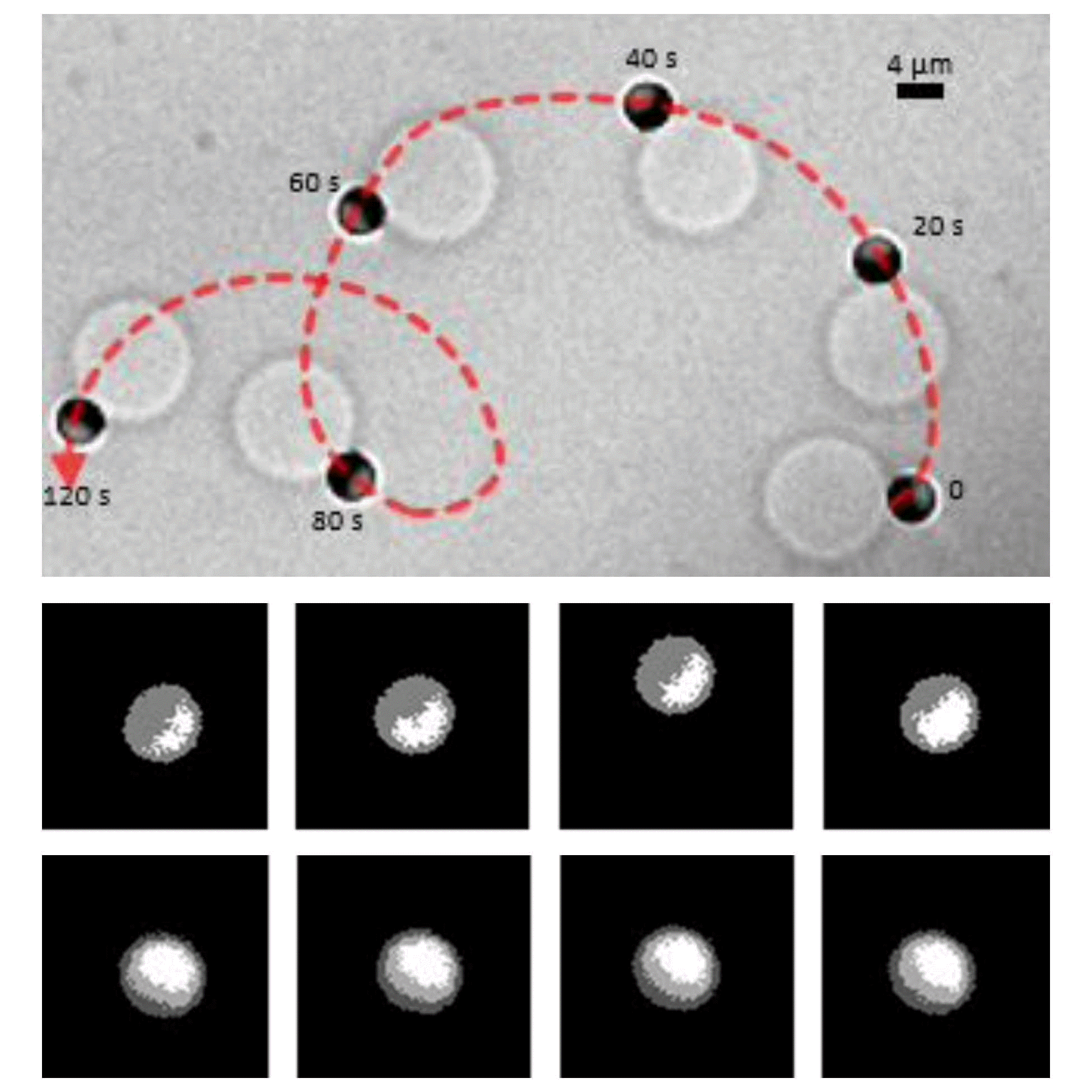
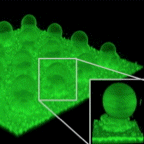
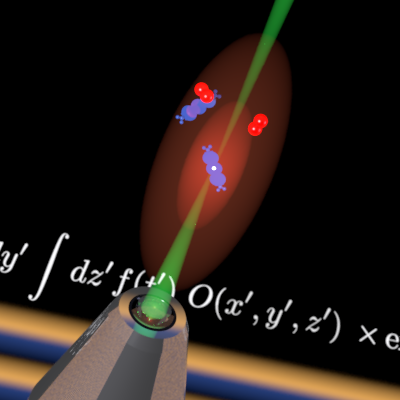
Singlet oxygen (1O2) is the first excited state of molecular oxygen and the key intermediate in photosensitized oxidation reactions. It is sensed by its near-infrared (NIR) phosphorescence emission peaking at 1270 nm. Here, we describe a 1O2 phosphorescence lifetime imaging microscope (1O2-PLIM) that enables acquisition of lifetime and intensity profiles of 1O2 phosphorescence with micrometer resolution. Scanning samples in a confocal configuration provided reconstruction of intensity and lifetime images of 1O2 emission from complex systems such as photosensitizer-bound polymer beads and cell cultures.
Publication 159

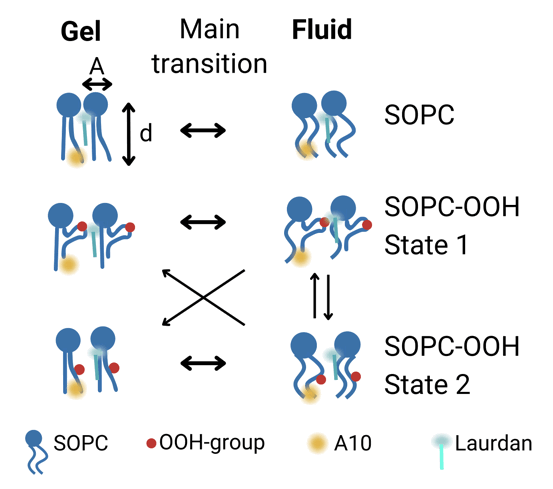
Main phase transition of hydroperoxidized SOPC bilayers

Lafarge, E.; van Teeffelen, S.; Schroder, A.P.; Muller, P.; Thalmann, F.; Bretonnière, Y.; Metilli, L.; Vagias, A.; Corne, L.; Marques, C.M.

J. Chem. Phys. 2026, 164, 185101

Abstract
Lipid hydroperoxidation significantly changes membrane biophysical properties, yet its effect on the main phase transition of unsaturated phospholipids remains unclear. Here, we investigate how hydroperoxidation of 1-stearoyl-2-oleoyl-sn-glycero-3-phosphocholine (SOPC) influences its phase behavior. Bilayers composed of SOPC and increasing fractions of hydroperoxidized SOPC (SOPC-OOH) were analyzed using differential scanning calorimetry, solvatochromic probes, and Laurdan generalized polarization fluorescence. The incorporation of hydroperoxidized acyl chains perturbed membrane thermodynamics, revealing a complex phase-transition landscape governed by the interplay between acyl-chain ordering and the spatial distribution of -OOH groups.
Publication 158

Negative lipid membranes enhance the adsorption of TAT-decorated elastin-like polypeptides micelles

Walter, V.; Schmatko, T.; Muller, P.; Schröder, A.P.; MacEwan, S.R.; Chilkoti, A.; Marques, C.M

Biophysical Journal 2024, 123, 901

Abstract
Cell-penetrating peptides, such as TAT, enhance the cellular internalization of drug delivery platforms, including micelles. Here, we investigate the interaction between negatively charged lipid membranes and micelles constructed from elastin-like polypeptides decorated with TAT peptides. Using giant unilamellar vesicles and quartz crystal microbalance experiments, we show that electrostatic attractions between TAT-functionalized micelles and negatively charged membrane lipids strongly promote micellar adsorption. Our findings highlight the key role played by membrane charge in modulating the binding efficiency and initial attachment steps of peptide-guided nanocarriers.
Publication 157

Thickness determination of hydroperoxidized lipid bilayers from medium-resolution cryo-TEM images

Lafarge, E.J.; Marques, C. M.; Schmutz, M.; Muller, P.; Schroder, A.P.

M.I.E. 2024, 700, 329

Abstract
Lipid peroxidation affects bilayer structural organization, including membrane thickness. In this chapter, we present a robust protocol for extracting lipid bilayer thickness values from medium-resolution cryo-transmission electron microscopy (cryo-TEM) images. We outline image-processing workflows designed to analyze intensity profiles across hydroperoxidized lipid membranes, enabling accurate structural characterization of modified model membranes without requiring high-end high-resolution equipment.
Publication 156

Rotational and translational drags of a Janus particle close to a wall and a lipid membrane

Sharma, V.; Fessler, F.; Thalmann, F.; Marques, C.M.; Stocco, A.

J.C.I.S. 2023, 652, 2159

Abstract
The hydrodynamics of anisotropic microparticles near surfaces plays a vital role in biological transport and active matter dynamics. We study the rotational and translational friction coefficients of asymmetric Janus particles near rigid planar walls and soft lipid membranes. Using optical tracking, we demonstrate how surface proximity and membrane flexibility alter anisotropic drag forces, revealing distinct hydrodynamic signatures governed by boundary conditions and lipid membrane mechanics.
Publication 155

Activation energy for pore opening in lipid membranes under an electric field.

Lafarge, E.J.; Muller, P.; Schroder, A.P.; Zaitseva, E.; Behrends, J.C.; Marques, C. M.

PNAS 2023, 120, e2213112120

Abstract
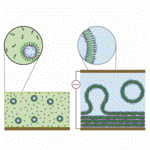
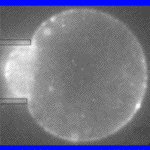
Electroporation is widely used to deliver molecules into biological cells, yet the precise physical energy barriers underlying field-induced pore creation remain debated. Here, we measure the activation energy required to nucleate pores in lipid bilayers exposed to electric fields. Combining electrophysiological measurements with theoretical modeling, we challenge standard electroporation models, providing new insights into how electric potential lowers the activation barrier for hydrophobic-to-hydrophilic pore transitions.
Publication 154

Directly imaging emergence of phase separation in peroxidized lipid membranes

Paez-Perez, M.; Vyšniauskas, A.; López-Duarte, I.; Lafarge, E.J.; López-Ríos De Castro, R; Marques, C.M.; Schroder, A.P.; Muller, P; Lorenz, C.D.; Brooks, N.J.; Kuimova, M.K.

Commun Chem 2023, 6, 15

Abstract
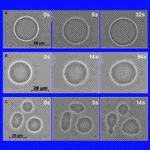
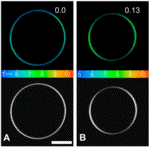
Oxidative stress induces chemical modifications in cell membranes that lead to altered physical behavior. Using fluorescence lifetime imaging microscopy with molecular rotors alongside molecular dynamics simulations, we directly image the emergence of microscopic phase separation driven by lipid peroxidation. We demonstrate how oxidized lipid species accumulate into distinct domains with altered viscosity and fluidity, providing visual evidence of membrane remodeling during oxidation.
Publication 153

Driven engulfment of janus particles by giant vesicles in and out of thermal equilibrium

Sharma, V.; Marques, C.M.; Stocco, A.

Nanomaterials 2022, 12, 1434.

Abstract
Endocytosis and particle uptake are fundamental membrane processes. Here, we investigate the interaction between giant lipid vesicles and Janus particles, exploring both passive (thermal) and active (driven) particle engulfment modes. We map out membrane wrapping transitions as a function of particle surface chemistry, local curvature, and driving force, identifying regime shifts between partial wrapping and full uptake.
Publication 152

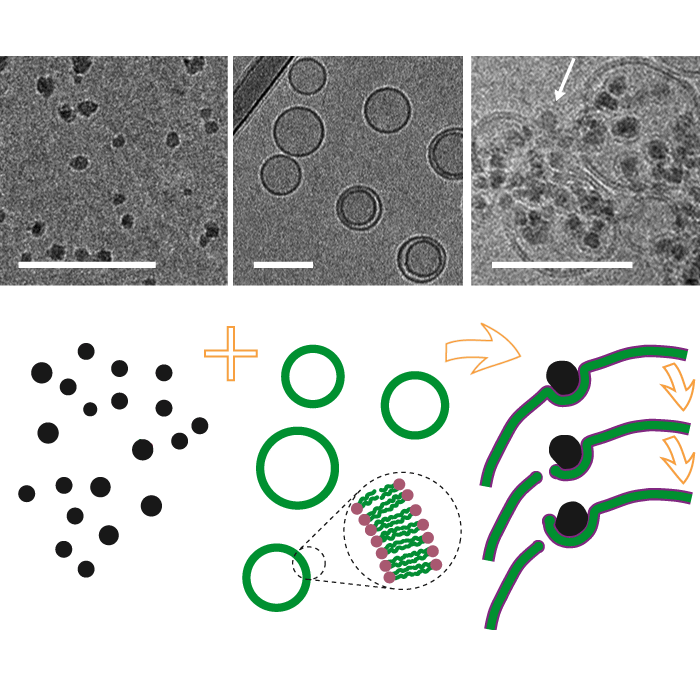
Tear of lipid membranes by nanoparticles

Er-Rafik, M.; Ferji, K.; Combet, J.; Sandre, O.; Lecommandoux, S.; Schmutz, M.; Le Meins, J.-F.; Marques, C.M.

Soft Matter 2022, 18, 4833

Abstract
Nanoparticle interactions with biological membranes can cause significant structural disruptions. We demonstrate that specific functionalized nanoparticles can induce mechanical tearing and rupture in lipid bilayers. Using scattering techniques and cryo-transmission electron microscopy, we characterize the pathway from nanoparticle adhesion to membrane localized tearing, detailing the physical mechanics governing membrane disruption.
Publication 151

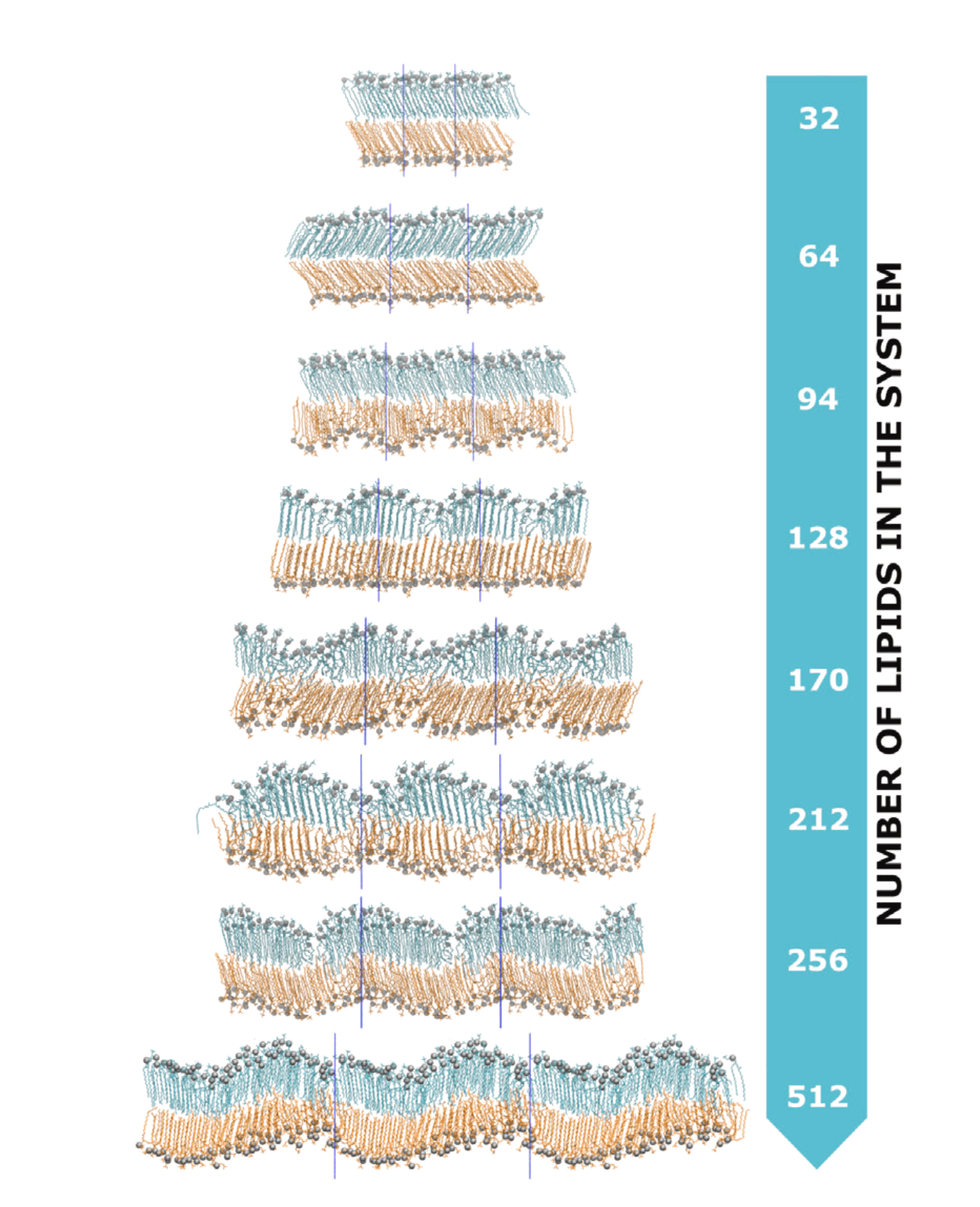
Ripple-like instability in the simulated gel phase of finite size phosphocholine bilayers

Walter, V.; Ruscher, C.; Gola, Adrien; Marques, C.M.; Benzerara, O.; Thalmann, F.

BBA-Biomembranes 2021, 1863, 183714.

Abstract
In molecular dynamics simulations of phospholipid bilayers, gel phases frequently present distinct undulations. We report a systematic investigation of a ripple-like mechanical instability in simulated finite-size phosphocholine bilayers below their main transition temperature. By evaluating system-size constraints and chain tilt dynamics, we uncover how lateral stresses and finite boundary conditions drive periodic structural modulations mimicking experimental ripple phases.
Publication 150

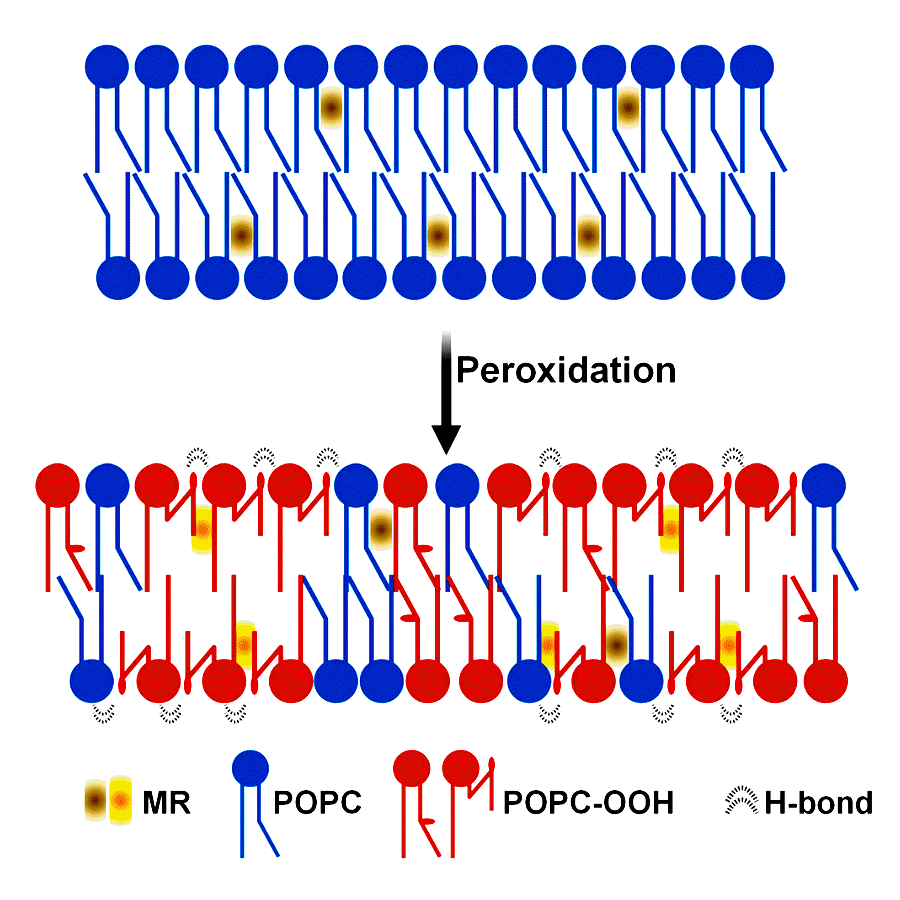
Molecular organization in hydroperoxidized POPC bilayers

Junqueira, H.; Schroder, A.P.; Thalmann, F.; Klymchenko, A.; Mély, Y.; Baptista, M.S.; Marques, C.M.

BBA-Biomembranes 2021, 1863, 183659

Abstract
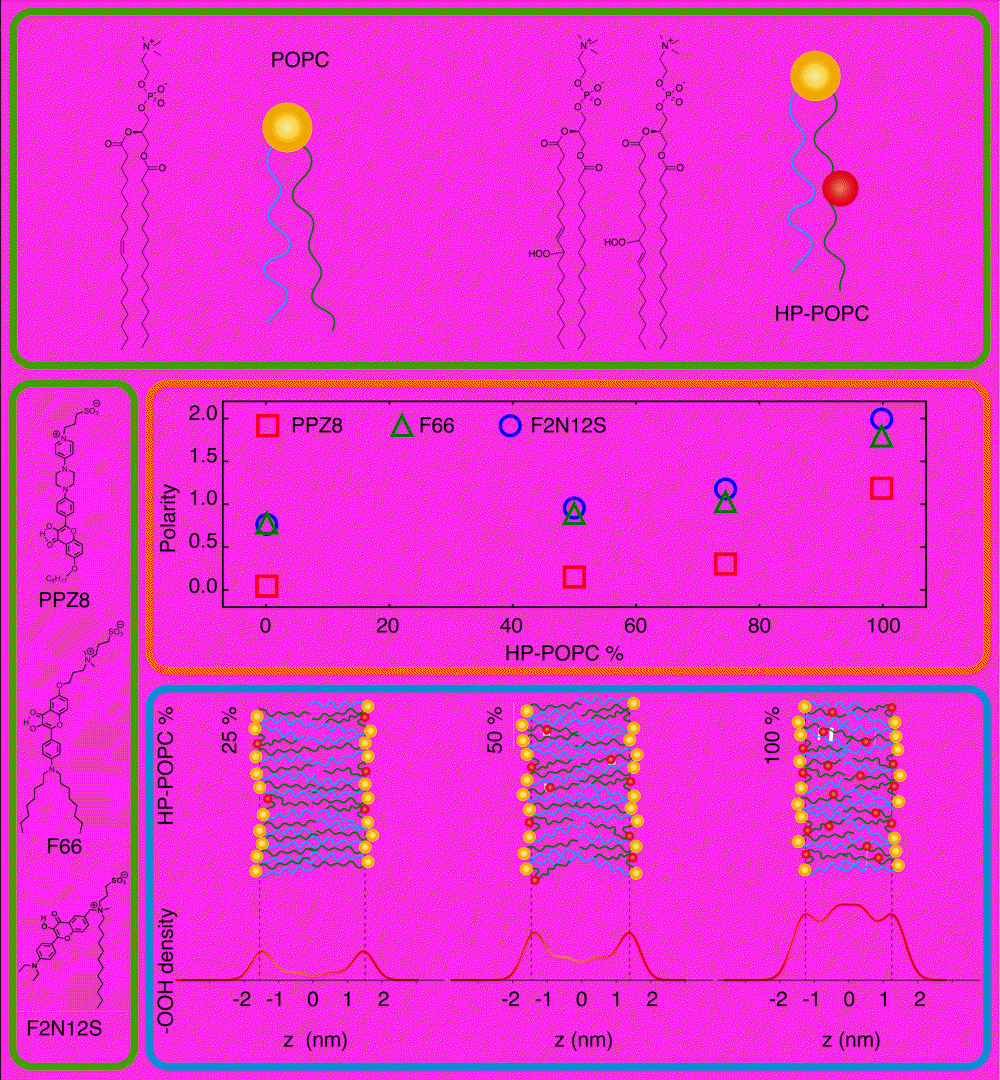
Hydroperoxidation of 1-palmitoyl-2-oleoyl-sn-glycero-3-phosphocholine (POPC) alters local lipid packing and polar headgroup orientation. Using environment-sensitive fluorescent probes combined with numerical models, we analyze how hydroperoxidized acyl chains migrate toward the membrane-water interface. The resulting modification increases water penetration into the hydrophobic core and significantly alters bilayer polarity and elasticity.
Publication 149

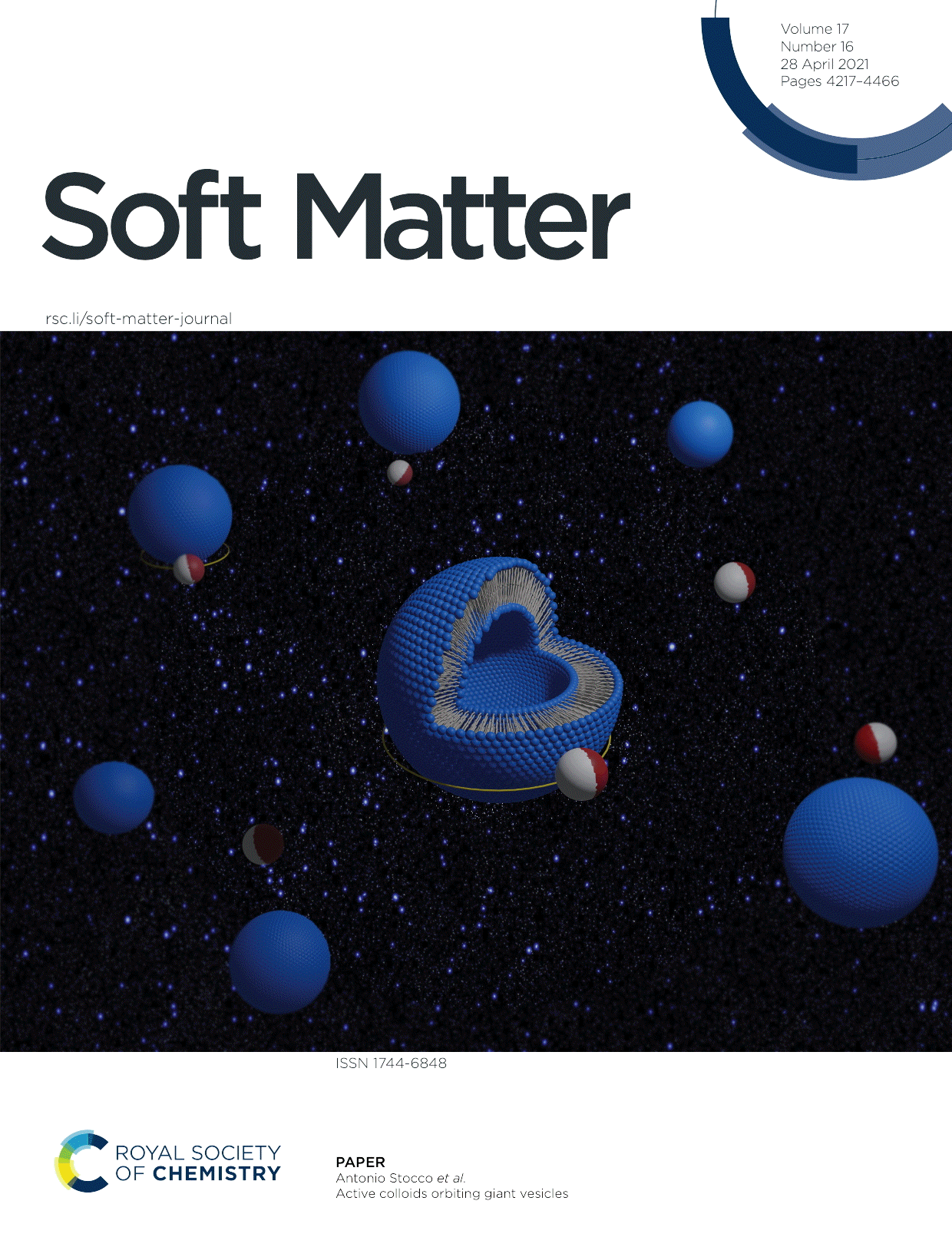
Active colloids orbiting giant vesicles

Vaibhav, S.; Azar, E.; Schroder, A.P.; Marques, C.M.; Stocco, A.

Soft Matter 2021, 17, 4217.

Abstract
Self-propelled active microswimmers exhibit rich dynamics near deformable boundaries. Here, we report active Janus microcolloids entering stable orbital trajectories around giant lipid vesicles. We show how the interplay between hydrodynamic interactions, self-phoretic forces, and local vesicle deformation stabilizes these orbital bound states, presenting a model system for active particle transport near soft interfaces.
Publication 148

Accumulation of styrene oligomers alters lipid membrane phase order and miscibility

Morandi, M.I.; Kluzek, M.; Wolff, J.; Schroder, A.P.; Thalmann, F.; Marques, C.M.;

PNAS 2021, 118, e2016037118

Abstract
Polystyrene nano-fragments and oligomers are prevalent environmental pollutants capable of interacting with cell membranes. We investigate how styrene oligomers partitioning into lipid bilayers influence phase behavior and domain order. We show that accumulating oligomers shift phase transition temperatures, suppress liquid-ordered/liquid-disordered phase coexistence, and disrupt native membrane organization, pointing to potential mechanisms of nanoplastic toxicity.
Publication 147

A machine learning study of the two states model for lipid bilayer phase transitions

Walter, V.; Ruscher, C.; Benzerara, O.; Marques, C.M.; Thalmann, F.

PCCP 2020, 22, 19147

Abstract
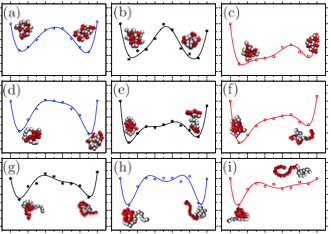
We present a machine learning approach to test the validity of the classic two-state model describing the main gel-to-fluid phase transition in lipid bilayers. Using supervised classification algorithms trained on molecular dynamics trajectory data, we analyze local structural configurations of individual lipid chains across the phase transition. Our findings clarify the extent to which intermediate configurations deviate from a simple two-state description, offering a refined framework for understanding cooperative phase behavior in lipid membranes.
Publication 146

Fluid Bilayer Phase in Aqueous Mixtures of Fatty Alcohol and Cationic Surfactant

Espinosa de Oliveira, T.; Leonforte, F.; Nicolas-Morgantini, L.; Fameau, A.-L.; Querleux, B.; Thalmann, F.; Marques, C.M.

Phys. Rev. Res. 2020, 2, 013075

Abstract
Aqueous mixtures of fatty alcohols and cationic surfactants are extensively used in hair-conditioning products and personal care formulations. We combine molecular dynamics simulations with experimental characterization to investigate the structural behavior and phase transitions of these mixtures. Our results highlight the formation of a stable fluid bilayer phase, clarifying the molecular packing, hydrogen-bonding networks, and electrostatics that stabilize these lamellar self-assembled structures across different compositions and temperatures.
Publication 145

Smart Responsive Polymers: Fundamentals and Design Principles

Mukherji, D.; Marques, C.M.; Kremer, K.

Annu. Rev. Cond. Mat. Phys., 2020, 11, 271

Abstract
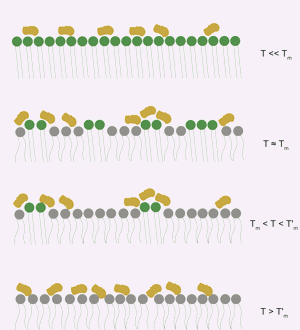
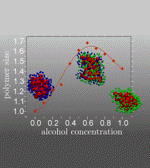
Smart responsive polymers undergo sharp conformational changes in response to small environmental variations such as temperature, solvent composition, pH, or light. In this review, we outline the fundamental thermodynamic and microscopic mechanisms governing coil-to-globule transitions, lower and upper critical solution temperatures (LCST/UCST), and co-nonsolvency effects. By bridging generic theoretical concepts with computer simulations and experimental realizations, we discuss key design principles for tailoring soft functional materials for targeted applications in drug delivery, sensing, and adaptive surfaces.
Publication 144

Shining light on membranes

Itri, R.; Marques, C.M.; Baptista, M.S.

In "The Giant Vesicle Book", Dimova, R.; Marques, C.M. (Eds), CRC Press 2020

Abstract
Lipid membrane systems in general and giant unilamellar vesicles (GUVs) in particular can be easily studied by techniques employing visible light, such as light microscopy: a GUV can be observed under a light microscope for many hours without being destroyed or transformed or even without suffering any visible degradation. However, phospholipids, cholesterol, proteins and other membrane-forming molecules that are fluorescently labeled for visualization, solutions with fluorophores added for measuring permeability and other properties, biomimetic constructs including light sensitive proteins embedded or interacting with the bilayer … arguably most practical GUV systems strongly absorb light and bare thus the potential of inducing membrane transformations when exposed to visible light, by mechanisms that we discuss in this chapter.
Publication 143

Theory of Polymer-Membrane Interactions in The Giant Vesicle Book , Dimova, R.; Marques, C.M. Eds

Thalmann, F; Marques, C.M.

In "The Giant Vesicle Book", Dimova, R.; Marques, C.M. (Eds), CRC Press 2020

Abstract
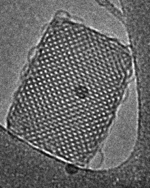
Polymers, also known as macromolecules, are high molecular weight species made by the covalent binding of units called monomers; they are ubiquitous in natural and industrial systems of self-assembled bilayers. In a living cell, macromolecules are by weight the most abundant carbon-containing molecules. In cosmetics, pharmaceutics or detergency most formulations of membrane solutions have polymers added for performance, processing, conditioning or delivery. The presence of polymers in, on, or in the vicinity of a membrane changes not only the structure and viscosity of the liquid media where the membranes evolve: it modifies the properties of the membrane itself and its interactions with the environment. Giant unilamellar vesicles are systems of choice for studying such changes. In this chapter we introduce basic theoretical concepts for understanding, quantifying and predicting membrane transformations induced by the presence of macromolecules.
Publication 142

Preparation methods for giant unilamellar vesicles

Dimova, R.; Stano, P.; Marques, C.M.; Walde, P.

In "The Giant Vesicle Book", Dimova, R.; Marques, C.M. (Eds), CRC Press 2020

Abstract
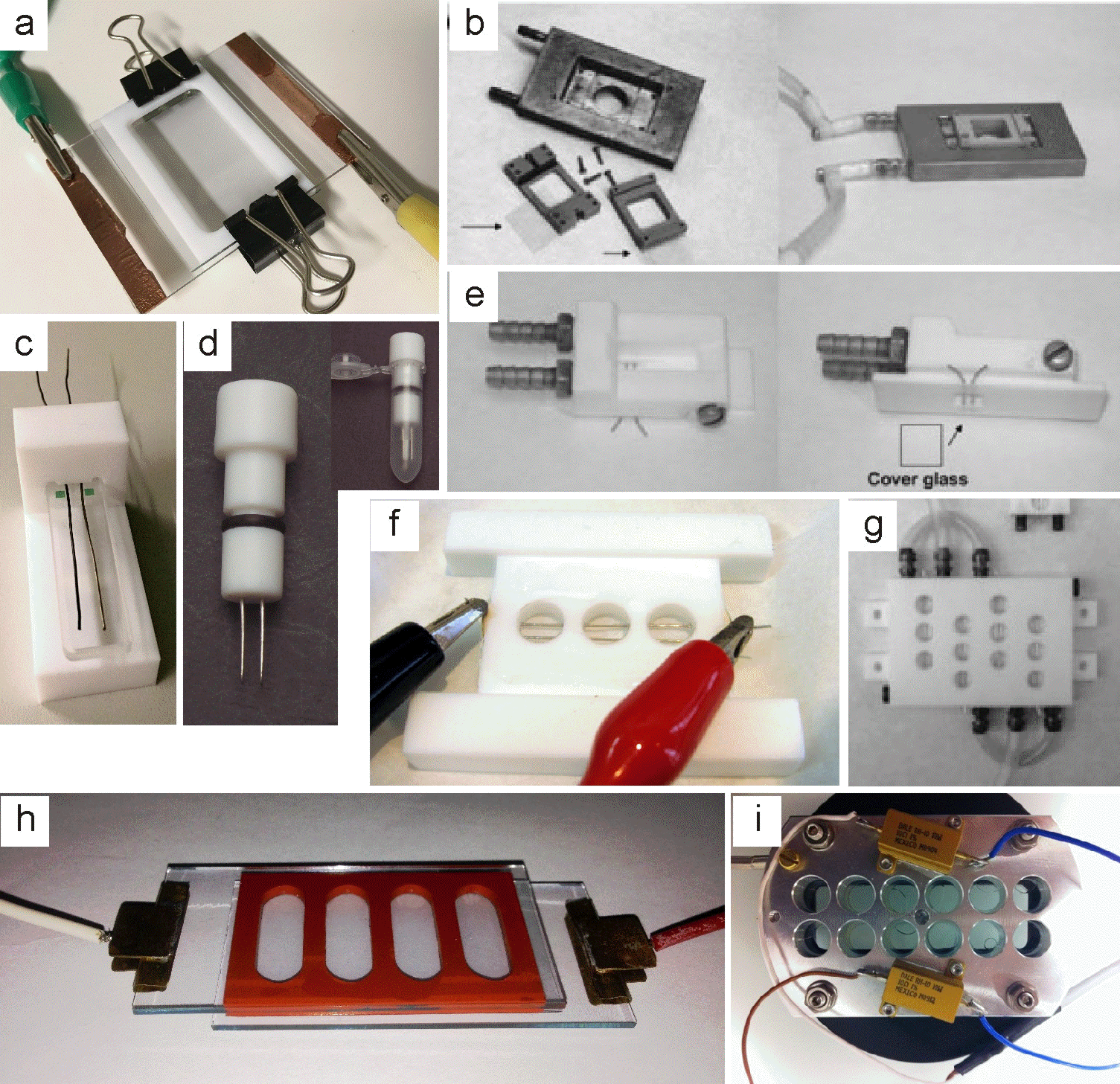
The science of single-bilayer vesicles with a giant size that has emerged at the end of the sixties has since grown within a multidisciplinary community that The Giant Vesicle Book is aimed to serve. This first chapter of the book must obviously be a practical guide for the scientist wishing to prepare giant unilamellar vesicles (GUVs): it thus introduces the founding spontaneous swelling strategies, but elaborates also on the large spectrum of the other methods that have since been developed to bring increased facility and improved control to the formation of giant unilamellar vesicles. The underlying principles as well as detailed protocols are introduced for vesicle electroformation, spontaneous and gel-assisted swelling, droplet-transfer and GUV blowing. Hints and tips for dealing with lipids and for making GUVs are also discussed in the chapter.
Publication 141

The Giant Vesicle Book

Dimova, R.; Marques, C.M. (Eds)

CRC Press 2020

Abstract
Giant vesicles are widely used as a model membrane system, both for basic biological systems and for their promising applications in the development of smart materials and cell mimetics, as well as in driving new technologies in synthetic biology and for the cosmetics and pharmaceutical industry. The reader is guided to use giant vesicles, from the formation of simple membrane platforms to advanced membrane and cell system models. It also includes fundamentals for understanding lipid or polymer membrane structure, properties and behavior. Every chapter includes ideas for further applications and discussions on the implications of the observed phenomena towards understanding membrane-related processes. The Giant Vesicle Book is meant to be a road companion, a trusted guide for those making their first steps in this field as well as a source of information required by experts.
Publication 140

Preparation of Monodispersed Giant Unilamellar Anchored Vesicles Using Micropatterned Hydrogel Substrates

Schultze, J.; Vagias, A.; Ye, L.; Prantl, E.; Breising, V.; Best, A., Koynov, K.; Marques, C.M.; Butt, H.-J.

ACS Omega, 2019, 4, 9393

Abstract
Giant unilamellar vesicles (GUVs) serve as fundamental model systems for biological membranes, but obtaining monodisperse populations attached to surfaces remains challenging. Here, we present a method for producing uniform, surface-anchored GUVs using micropatterned hydrogel substrates. By controlling hydrogel geometry and surface chemistry, we demonstrate high-yield formation of monodisperse anchored vesicles, enabling systematic, reproducible studies of membrane mechanics, adhesion, and transport processes.
Publication 139

Soft and Smart: Co-nonsolvency-Based Design of Multiresponsive Copolymers

Mukherji, D.; Watson, M.D.; Morsbach, S.; Schmutz, M.; Wagner, M.; Marques, C.M.; Kremer, K.

Macromolecules, 2019, 52, 2471

Abstract
Co-nonsolvency occurs when a polymer collapses in a mixture of two good solvents. We exploit this phenomenon to formulate design guidelines for smart multiresponsive copolymers. Combining computer simulations with experiments, we reveal how varying solvent composition and copolymer sequence enables fine control over conformational collapse and phase separation behavior, paving the way for advanced responsive soft materials.
Publication 138

A coarse-grained model of oxidized membranes and their interactions with nanoparticles of various degrees of hydrophobicity

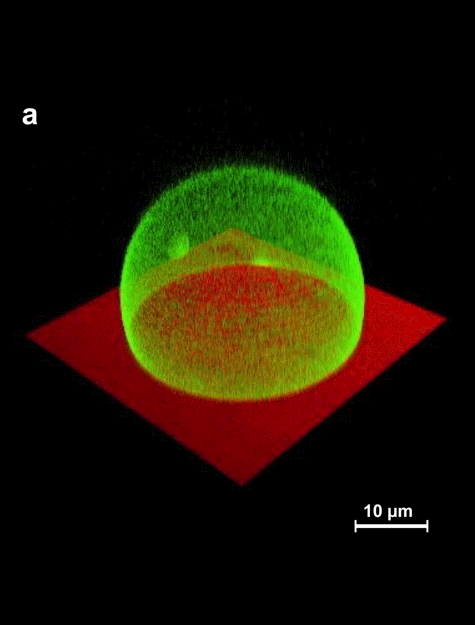
Su, C.; Merlitz, H.; Thalmann, F.; Marques, C.M.; Sommer J.-U.

J. Phys. Chem. C, 2019, 123, 6839

Abstract
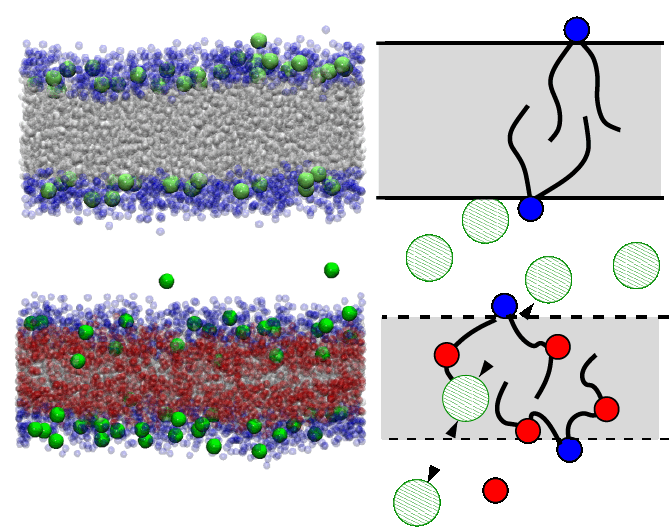
Membrane oxidation alters bilayer structure and dynamics, influencing nanoparticle-cell interactions. We develop a coarse-grained molecular dynamics model to simulate oxidized lipid membranes and evaluate their interactions with nanoparticles possessing varying hydrophobicities. We demonstrate that oxidized lipid chains increase membrane permeability and polarity, significantly lowering the energy barrier for nanoparticle insertion and translocation across the bilayer.
Publication 137

The role of shape disorder in the collective behaviour of aligned fibrous matter

Salamone, S.; Schulmann, N.; Benzerara, O.; Meyer, H.; Charitat, T.; Marques, C.M.

Soft Matter, 2019, 15, 2657

Abstract
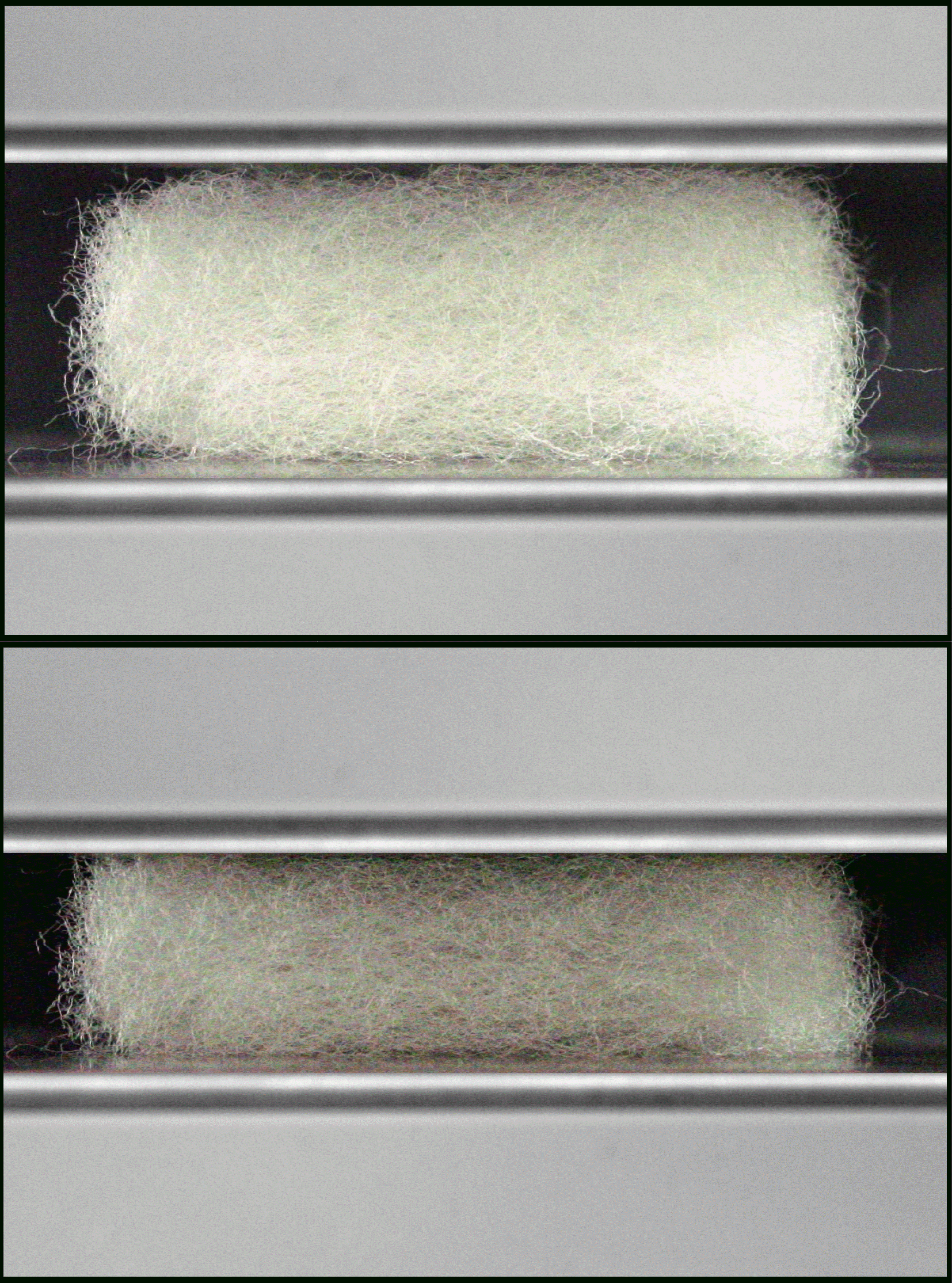
Aligned fibrous networks are widespread in biological tissues and synthetic materials, yet structural heterogeneity significantly impacts their mechanical response. We investigate how shape disorder among individual fibers affects the collective packing and mechanical compliance of aligned fibrous assemblies. Using numerical simulations, we demonstrate that fiber shape variations suppress long-range order and generate distinct stress-distribution patterns under compression.
Publication 136

Interaction of Giant Unilamellar Vesicles with the Surface Nanostructures on Dragonfly Wings

Cheeseman, S.; Truong, V.K.; Walter, V.; Thalmann, F.; Marques, C.M.; Hanssen, E.; Vongsvivut, J.; Tobin, M.J.; Baulin, V.A.; Juodkazis, S.; Maclaughlin, S.; Bryant, G.; Crawford, R.J.; Ivanova, E.P.

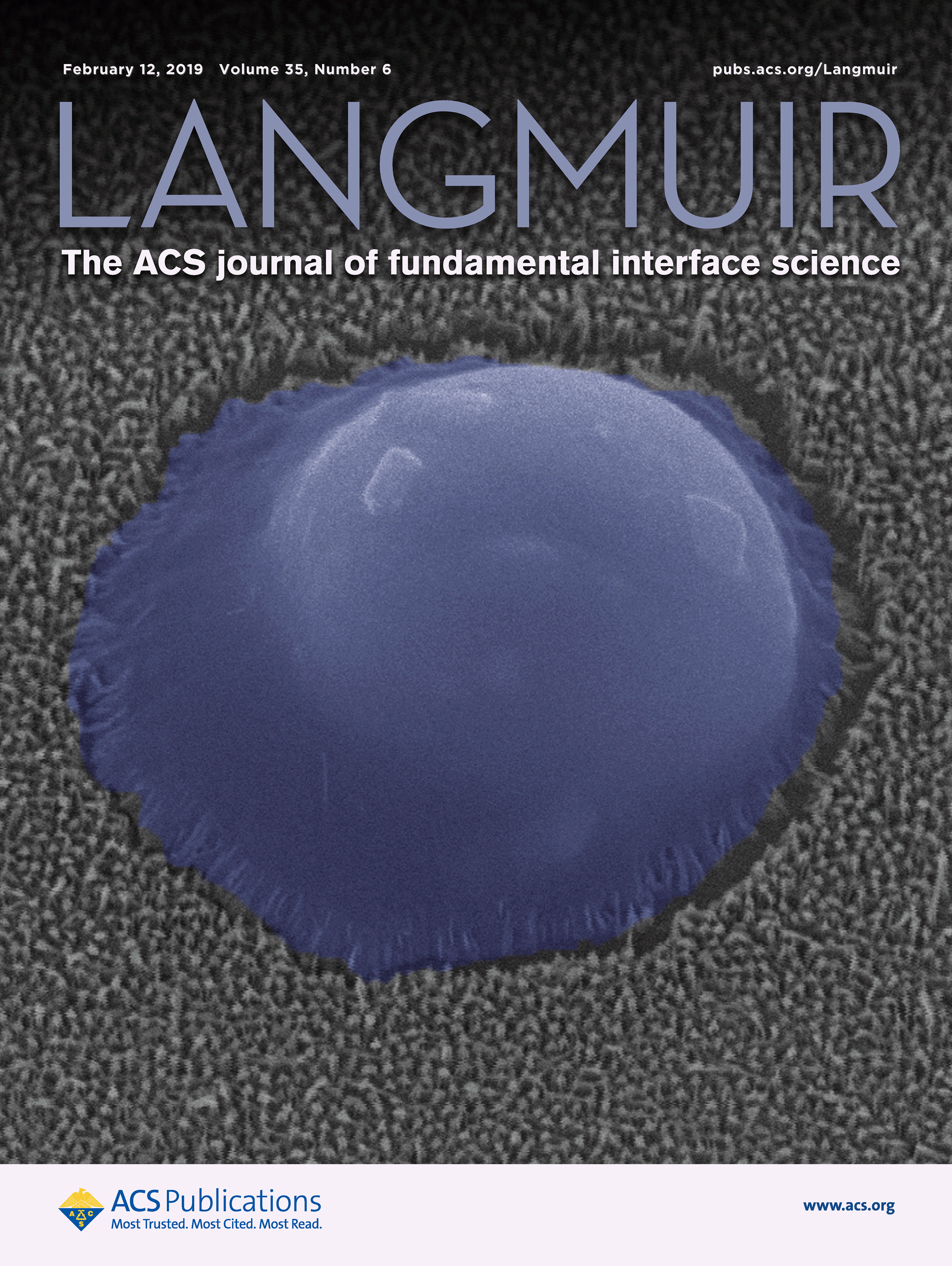
Langmuir, 2019, 35, 2422

Abstract
Insect wings feature natural nanopillared structures that exhibit bactericidal properties through mechanical membrane rupture. We examine the physical interaction between giant unilamellar vesicles and the nanostructured surface of dragonfly wings. By monitoring vesicle deformation, stretching, and rupture dynamics, we reveal how mechanical stress concentration at nanopillar contact sites drives lipid membrane failure without chemical agents.
Publication 135

Rapid confocal imaging of vesicle-to-sponge phase droplet transition in dilute dispersions of the C10E3 surfactant

Schroder, A.P.; Crassous, J.J.; Marques, C.M.; Olsson, U.

Sci. Rep., 2019, 9, 2292

Abstract
Self-assembled surfactant systems can exhibit striking structural transformations upon temperature changes. Here, we capture the fast dynamics of the temperature-induced transformation from vesicles to sponge phase droplets in dilute aqueous solutions of the nonionic surfactant C10E3 using rapid confocal microscopy. Our real-time imaging reveals the nucleation, growth, and morphology changes during droplet formation, offering detailed mechanistic insights into membrane topological rearrangements during phase transitions.
Publication 134

Kinetic evolution of DOPC lipid bilayers exposed to α-cyclodextrins

Kluzek, M.; Schmutz, M.; Marques, C.M.; Thalmann, F.

Soft Matter, 2018, 14, 5800

Abstract
Cyclodextrins interact with lipid membranes by extracting specific lipid components or forming inclusion complexes. Here, we track the kinetic evolution of DOPC lipid bilayers upon exposure to α-cyclodextrins. Using structural and optical characterization, we quantify lipid extraction dynamics, membrane defect formation, and the resulting structural transformations induced by cyclodextrin-mediated lipid stripping.
Publication 133

Permeability of DOPC bilayers under photoinduced oxidation: Sensitivity to photosensitizer

Bacellar, I.O.L.; Baptista, M.S.; Junqueira, H.C.; Wainwright, M.; Thalmann, F.; Marques, C.M.; Schroder, A.P.

B.B.A. Biomembranes, 2018, 1860, 2366

Abstract
Photoinduced oxidation generates reactive oxygen species that alter lipid bilayer permeability and structural integrity. We examine the permeability changes of DOPC bilayers subjected to oxidation using different photosensitizers. We show that the choice and localization of the photosensitizer critically determine the rate of lipid oxidation, membrane pore formation, and solute leakage across the bilayer.
Publication 132

DPPC Bilayers in Solutions of High Sucrose Content

Morandi, M.I.; Sommer, M.; Kluzek, M.; Thalmann, F.; Schroder, A.P.; Marques, C.M.

Biophys. J., 2018, 114, 2165

Abstract
Sugars act as crucial lyoprotectants for lipid membranes, but high sugar concentrations significantly modify solvent viscosity and membrane thermodynamics. We investigate DPPC bilayers in aqueous solutions with high sucrose contents. Through thermal and structural analysis, we demonstrate how sucrose alters main phase transition temperatures, chain packing density, and membrane bending rigidity under osmotically stressed conditions.
Publication 131

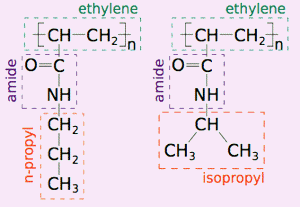
Molecular dynamics study of the LCST transition in aqueous poly(N-n-propylacrylamide)

de Oliveira, T.E.; Marques, C.M.; Netz, P.A.K.

PCCP 2018, 20, 10100

Abstract
Poly(N-n-propylacrylamide) displays a thermoresponsive lower critical solution temperature (LCST) transition in water. Using atomistic molecular dynamics simulations, we analyze the conformational changes, hydration shell dynamics, and hydrogen-bonding networks across the LCST. The simulations clarify how local hydrophobic hydration vs. amide hydrogen bonding controls coil-to-globule collapse upon heating.
Publication 130

Collapse in two good solvents, swelling in two poor solvents: defying the laws of polymer solubility?

Mukherji, D.; Marques, C.M.; Kremer, K.

Journal of Physics: Condensed Matter, 2017, 30, 024002

Abstract
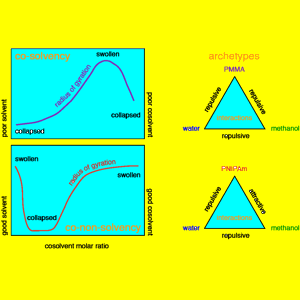
Classical polymer solubility theories predict intuitive mixing behavior, yet co-nonsolvency and co-solvency anomalies challenge standard thermodynamic models. We explore counterintuitive solubility phenomena where polymers collapse in mixtures of two good solvents or swell in mixtures of two poor solvents. We present a generalized framework based on local preferential adsorption and competitive interaction energy scales.
Publication 129

Fluorescent and Photosensitizing Conjugates of Cell-Penetrating Peptide TAT(47-57): Design, Microwave-Assisted Synthesis at 60 °C, and Properties

Okuda-Shinagawa, N.M.; Moskalenko, Y.E.; Junqueira, H.C.; Baptista, M.S.; Marques, C.M.; Machini, M.T.

ACS Omega, 2017, 2, 8156

Abstract
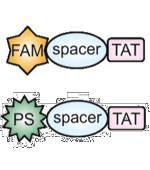
Cell-penetrating peptides are effective vectors for delivering bioactive molecules across cellular barriers. We synthesize fluorescent and photosensitizing TAT(47-57) peptide conjugates via a temperature-controlled microwave-assisted protocol. We evaluate their photophysical properties, membrane binding capabilities, and cellular uptake profiles, demonstrating efficient photo-induced membrane disruption for target therapeutic applications.
Publication 128

Reply to the "Comment on 'Relating side chain organization of PNIPAm with its conformation in aqueous methanol'"

Mukherji, D.; Wagner, M.; Watson, M.D.; Winzen, S.; de Oliveira, T.E.; Marques, C.M.; Kremer, K.

Soft Matter, 2017, 13, 7701

Abstract
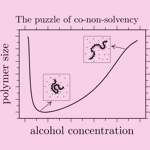
In this reply, we address comments regarding PNIPAm side-chain conformation and local hydration structure in aqueous methanol mixtures. We clarify the microscopic physical origin of co-nonsolvency, reinforcing that preferential binding of alcohol molecules to polymer segments—rather than bulk solvent restructuring effects—drives coil collapse.
Publication 127

Influence of a pH-sensitive polymer on the structure of monoolein cubosomes

Kluzek, M.; Tyler, A.I.; Wang, S.; Chen, R.; Marques, C.M.; Thalmann, F.; Seddon, J.M.; Schmutz, M.

Soft Matter, 2017, 13, 7571

Abstract
Cubosomes are bicontinuous cubic liquid-crystalline nanoparticles widely used for drug encapsulation. We incorporate a pH-responsive polymer into monoolein cubosomes to control their internal nanostructure. Small-angle X-ray scattering and cryo-TEM reveal reversible structural transitions between cubic phases upon changing environmental pH, providing a mechanism for triggered release.
Publication 126

Depleted depletion drives polymer swelling in poor solvent mixtures

Mukherji, D.; Marques, C.M.; Stuehn, T.; Kremer, K.

Nature Communications, 2017, 8, 1374

Abstract
Polymers insoluble in two distinct pure solvents can surprisingly dissolve when the two solvents are mixed—a counterintuitive phenomenon known as co-solvency. Using molecular simulations and analytical theory, we reveal that this swelling is driven by a 'depleted depletion' mechanism: competitive interaction between solvent species alters local osmotic pressures, stabilizing expanded polymer conformations.
Publication 125

Study on the Application of Electric Field to Giant Vesicles Comprised of 1,2-Dilauroyl-Sn-Glycero-3-Phosphatidylcholine Using Optical Fluorescence Microscopy

Micheletto, Y.M.S.; Silveira, N.P.D.; Dal-Bé, A.G.; Giacomelli, F.C.; Dias Filho, N.L.; Frizon, T.E.A.; Marques, C.M.; Schroder, A.P.

Materials Research, 2017, 20, 1032

Abstract
Electric fields exert strong mechanical forces on lipid membranes, leading to vesicle deformation, electrodehydroformation, or electroporation. We apply alternating current electric fields to DLPC giant unilamellar vesicles observed by fluorescence microscopy. We map deformation modes and electroporation thresholds as a function of field frequency and amplitude, quantifying membrane relaxation dynamics.
Publication 124

Reply to the "Comment on 'Relating side chain organization of PNIPAm with its conformation in aqueous methanol'"

Mukherji, D.; Wagner, M.; Watson, M.D.; Winzen, S.; de Oliveira, T.E.; Marques, C.M.; Kremer, K.

Soft Matter, 2017, 13, 2292

Abstract
We respond to discussion regarding the thermodynamics of PNIPAm collapse in mixed solvent systems. Re-evaluating computer simulations and experimental data, we confirm that attractive monomer-cosolvent interactions generate bridging configurations, validating the local preferential adsorption model for co-nonsolvency.
Publication 123

Cargo self-assembly rescues affinity of cell-penetrating peptides to lipid membranes

Weinberger, A.; Walter, V.; MacEwan, S.R.; Schmatko, T.; Muller, P.; Schröder, A.P.; Chilkoti, A.; Marques, C.M.

Sci. Rep., 2017, 7, 43963

Abstract
Attaching molecular cargo to cell-penetrating peptides often reduces their membrane binding affinity. We demonstrate that conjugating peptides to self-assembling macromolecular cargos restores high membrane affinity. Multivalent presentation arising from cargo self-assembly enhances local peptide density, dramatically boosting binding and membrane interaction compared to monomeric peptide constructs.
Publication 122.5

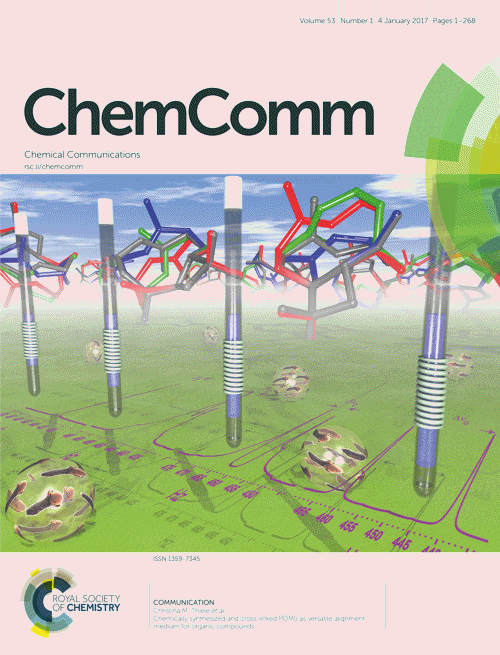
Chemically synthesized and cross-linked PDMS as versatile alignment medium for organic compounds

Moskalenko, Y.E.; Bagutski, V.; Thiele, C.M.

Chem. Commun., 2017, 53, 95

Abstract
Cross-linked poly(dimethylsiloxane) (PDMS) gels serve as versatile strain-induced alignment media for measuring residual dipolar couplings in organic NMR spectroscopy. We present a synthetic method for tailored PDMS networks with tunable cross-linking density, demonstrating controlled anisotropic alignment for small organic molecules across diverse organic solvents.
Publication 122

Relating side chain organization of PNIPAm with its conformation in aqueous methanol

Mukherji, D.; Wagner, M.; Watson, M.D.; Winzen, S.; de Oliveira, T.E.; Marques, C.M.; Kremer, K.

Soft Matter, 2016, 12, 7995

Abstract
The thermoresponsive polymer poly(N-isopropylacrylamide) (PNIPAm) exhibits pronounced co-nonsolvency in water-methanol mixtures. Combining experiments and molecular dynamics simulations, we correlate local isopropyl side-chain orientation with macroscopic backbone coil collapse, establishing the molecular origin of solvent-mediated hydrophobic collapse.
Publication 121

Electroformation of Giant Unilamellar Vesicles: Investigating Vesicle Fusion versus Bulge Merging

Micheletto, Y.M.S.; Marques, C.M.; Silveira, N.P.D.; Schroder, A.P.

Langmuir, 2016, 32, 8123

Abstract
Electroformation is a widely used technique for growing giant unilamellar vesicles, but its growth pathways remain debated. Using high-resolution optical microscopy, we observe the electroformation process to distinguish between lipid bulge growth/merging on the substrate and full vesicle-vesicle fusion in solution, establishing mechanistic guidelines to optimize vesicle yield and size distribution.
Publication 120

Interaction of jack bean (Canavalia ensiformis) urease and a derived peptide with lipid vesicles

Micheletto, Y.M.; Moro, C.F.; Lopes, F.C.; Ligabue-Braun, R.; Martinelli, A.H.; Marques, C.M.; Schroder, A.P.; Carlini, C.R.; da Silveira, N.P.

Colloids and Surfaces B, 2016, 145, 576

Abstract
Ureases display biological activities independent of their enzymatic function, including cell membrane permeabilization. We investigate the interaction of intact jack bean urease and a peptide fragment with zwitterionic and anionic lipid vesicles. Membrane binding assays and leakiness tests reveal peptide-induced pore formation and bilayer destabilization mechanisms.
Publication 119

Sliding tethered ligands add topological interactions to the toolbox of ligand-receptor design

Bauer, M.; Kékicheff, P.; Iss, J.; Fajolles, C.; Charitat, T.; Daillant, J.; Marques, C.M.

Nat. Commun., 2015, 6, 8117

Abstract
Specific ligand-receptor interactions govern molecular recognition in biological systems. We introduce functionalized polymer anchors capable of sliding laterally along lipid membranes. Direct force measurements show that sliding mobility introduces topological entropy effects that enhance binding versatility and alter adhesion energy profiles between functionalized surfaces.
Publication 118

Dielectric discontinuity in equilibrium block copolymer micelles

Korobko, A.V.; Marques, C.M.; Schöps, M.; Schädler, V.; Wiesner, U.; Mendes, E.

Soft Matter, 2015, 11, 7081

Abstract
Block copolymer micelles possess sharp spatial boundaries separating their hydrophobic cores from hydrophilic coronae. We measure dielectric properties across self-assembled block copolymer micellar solutions, revealing a dielectric permittivity jump at the core-corona interface that influences ion distribution and micellar stability.
Publication 117

Bioadhesive giant vesicles for monitoring hydroperoxidation in lipid membranes

Aoki, P.H.B.; Schroder, A.P.; Constantino, C.J.L.; Marques, C.M.

Soft Matter, 2015, 11, 5995

Abstract
Lipid hydroperoxidation alters the physical properties of cellular membranes. We develop a bioadhesive giant unilamellar vesicle assay to quantify lipid oxidation in real time. Immobilizing GUVs on functionalized surfaces permits continuous optical tracking of membrane area expansion, mechanical softening, and pore formation during oxidative stress.
Publication 116

Co-non-solvency: Mean-field polymer theory does not describe polymer collapse transition in a mixture of two competing good solvents

Mukherji, D.; Marques, C.M.; Stuehn, T.; Kremer, K.

J. Chem. Phys., 2015, 142, 114903

Abstract
Co-non-solvency refers to the collapse of a polymer in mixtures of two miscible, good solvents. We show that classical mean-field Flory-Huggins theories fail to capture co-non-solvency because they omit local site-binding and concentration fluctuations. Molecular simulations demonstrate that local preferential adsorption drives monomer-bridging and conformational collapse.
Publication 115

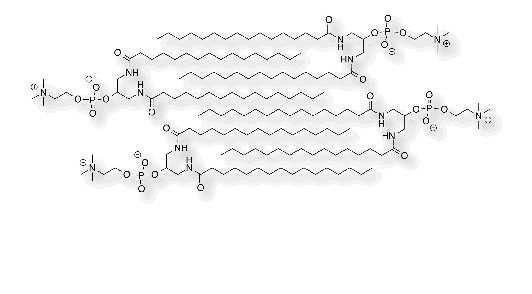
Bilayer Properties of 1,3-Diamidophospholipids

Weinberger, A.; Tanasescu, R.; Stefaniu, C.; Fedotenko, I.; Favarger, F.; Ishikawa, T.; Brezesinski, G.; Marques, C.M.; Zumbuehl, A.

Langmuir, 2015, 31, 1879

Abstract
1,3-Diamidophospholipids feature intermolecular hydrogen-bonding networks within their headgroup regions. We investigate bilayer membranes formed from synthetic 1,3-diamidophospholipids, analyzing phase transitions, membrane bending stiffness, and mechanical stability. Strong inter-lipid hydrogen bonding yields enhanced mechanical rigidity and shear resistance compared to natural ester-linked phospholipids.
Publication 114

Adhesion of giant unilamellar vesicles on double-end grafted DNA carpets

Sun, Y.; Marques, C.M.; Schroder, A.P.

Eur. Phys. J. Spec. Top., 2014, 223, 1755

Abstract
DNA carpets present versatile platforms for bio-functionalizing surfaces. We examine the adhesion dynamics of giant unilamellar vesicles on substrates grafted with double-ended DNA strands. By tuning grafting density and hybridization states, we control vesicle contact angles, adhesion energy, and membrane deformation modes.
Publication 113

Polymer collapse in miscible good solvents is a generic phenomenon driven by preferential adsorption

Mukherji, D.; Marques, C.M.; Kremer, K.

Nature Communications, 2014, 5, 4882

Abstract
Co-nonsolvency, where a polymer collapses in mixtures of two individually good solvents, has long been regarded as a specific anomaly of smart hydrogels like PNIPAm. Here, we demonstrate that co-nonsolvency is a generic thermodynamic phenomenon driven by preferential solvent adsorption, occurring whenever cosolvent molecules preferentially bind to polymer segments and cross-link them dynamically.
Publication 112

Can adding oil control domain formation in binary amphiphile bilayers?

Greenall, M.J.; Marques, C.M.

Soft Matter, 2014, 10, 7925

Abstract
Phase separation in lipid bilayers drives functional membrane domain formation. Using self-consistent field theory, we investigate how incorporating hydrophobic oil molecules into binary amphiphile bilayers alters domain size and phase boundaries. We find that trace amounts of oil partition preferentially into domain boundaries, tuning line tension and microphase domain dimensions.
Publication 111

Lipid oxidation induces structural changes in biomimetic membranes

Weber, G.; Charitat, T.; Baptista, M.S.; Uchoa, A.F.; Pavani, C.; Junqueira, H.C.; Guo, Y.; Baulin, V.A.; Itri, R.; Marques, C.M.; Schroder, A.P.

Soft Matter, 2014, 10, 4241

Abstract
Oxidative damage to cell membranes is linked to pathological conditions and photodynamic therapies. We combine experimental and computational approaches to evaluate how lipid hydroperoxidation alters membrane thickness, area per lipid, and mechanical rigidity. Oxidized lipids bend toward the aqueous phase, increasing membrane area and permeability.
Publication 110

Enhanced Chemical Synthesis at Soft Interfaces: A Universal Reaction-Adsorption Mechanism in Microcompartments

Fallah-Araghi, A.; Meguellati, K.; Baret, J.C.; El Harrak, A.; Mangeat, T.; Karplus, M.; Ladame, S.; Marques, C.M.; Griffiths, A.D.

Phys. Rev. Lett., 2014, 112, 028301

Abstract
Chemical reaction rates inside microcompartments, such as microemulsion droplets, often exceed rates observed in bulk solution. We present a combined experimental and theoretical framework demonstrating that interfacial adsorption concentrates reactants at droplet boundaries. This interface-driven reaction-adsorption mechanism significantly accelerates synthetic chemistry in small volumes.
Publication 109

Physical Damage on Giant Vesicles Membrane as a Result of Methylene Blue Photoirradiation

Mertins, O.; Bacellar, I.O.L.; Thalmann, F.; Marques, C.M.; Baptista, M.S.; Itri, R.

Biophys. J., 2014, 106, 162

Abstract
Methylene blue is a widely used photosensitizer in photodynamic therapy. We monitor giant unilamellar vesicles under methylene blue photoirradiation in real time. Generation of singlet oxygen causes lipid oxidation, inducing initial membrane area expansion followed by macroscopic pore formation and eventual vesicle destruction.
Publication 108

Enhanced imine synthesis in water: from surfactant-mediated catalysis to host-guest mechanisms

Meguellati, K.; Fallah-Araghi, A.; Baret, J.C.; El Harrak, A.; Mangeat, T.; Marques, C.M.; Griffiths, A.D.; Ladame, S.

Chem. Commun., 2013, 49, 11332

Abstract
Imine synthesis in pure water is thermodynamically disfavored due to hydrolysis. We report significant rate acceleration and enhanced thermodynamic yields of imine formation in aqueous media using surfactant micellar catalysis and host-guest encapsulation systems that shield dynamic covalent bonds from surrounding water molecules.
Publication 107

Gel-Assisted Formation of Giant Unilamellar Vesicles

Weinberger, A.; Tsai, F.-C.; Koenderink, G.H.; Schmidt, T.F.; Itri, R.; Meier, W.; Schmatko, T.; Schroder, A.; Marques, C.M.

Biophys. J., 2013, 105, 154

Abstract
Conventional GUV formation methods often suffer from low yield or sensitivity to physiological salt concentrations. We present a gel-assisted hydration method using agarose or PVA substrates to rapidly form high yields of GUVs in high-ionic-strength buffers, enabling efficient encapsulation of biomacromolecules.
Publication 106

Polymer Brushes under High Load

Balko, S.M.; Kreer, T.; Costanzo, P.J.; Patten, T.A.; Johner, A.; Kuhl, T.L.; Marques, C.M.

PLOS ONE, 2013, 8, e58392

Abstract
End-grafted polymer brushes provide exceptional lubrication and wear protection under compressive loads. We investigate dense polymer brushes subjected to high compressive stress using Surface Forces Apparatus measurements and scaling analysis, mapping chain interpenetration limits and mechanical resistance under strong confinement.
Publication 105

Pressure exerted by a grafted polymer on the limiting line of a semi-infinite square lattice

Jensen, I.; Dantas, W.G.; Marques, C.M.; Stilck, J.F.

J. Phys. A: Math. Theor., 2013, 46, 115004

Abstract
A polymer chain tethered to a surface exerts entropic force on surrounding boundaries. Using exact enumeration and transfer-matrix techniques on a semi-infinite square lattice, we compute the local pressure profile generated by a grafted self-avoiding walk against a constraining boundary line.
Publication 104

Can Amphiphile Architecture Directly Control Vesicle Size?

Greenall, M.; Marques, C.M.

Phys. Rev. Lett., 2013, 110, 088301

Abstract
Self-assembled vesicle size is typically dictated by kinetic pathway processing rather than equilibrium thermodynamics. Using self-consistent field theory, we demonstrate that tuning the molecular architecture of block copolymers or amphiphiles directly modulates monolayer spontaneous curvature and bending moduli. This architectural control stabilizes thermodynamic equilibrium vesicle populations with narrowly defined size distributions.
Publication 103

Membrane insertion of sliding anchored polymers

Bauer, M.; Bernhardt, M.; Charitat, T.; Kékicheff, P.; Fajolles, C.; Fragneto, G.; Marques, C.M.; Daillant, J.

Soft Matter, 2013, 9, 1700

Abstract
Hydrophobically modified polymers can insert into lipid membranes to alter membrane mechanics and surface interaction profiles. We investigate the insertion dynamics and equilibrium structure of end-functionalized polymers featuring sliding rings or anchors into lipid bilayers. Neutron reflectometry and surface force measurements quantify the insertion depth and conformational state of the anchored polymer chains.
Publication 102

Hydrophobic droplets in amphiphilic bilayers: a coarse-grained mean-field theory study

Greenall, M.; Marques, C.M.

Soft Matter, 2012, 8, 3308

Abstract
Incorporating hydrophobic molecules or oils into amphiphilic bilayers modifies membrane thickness, local curvature, and phase behavior. We apply a coarse-grained self-consistent field theory to model the formation and structure of hydrophobic droplets localized within the central core of an amphiphilic bilayer, characterizing lens formation and lipid chain deformation around the oil core.
Publication 101

Photo-activated phase separation in giant vesicles made from different lipid mixtures

Haluska, C.K.; Baptista, M.S.; Fernandes, A.U.; Schröder, A.P.; Marques, C.M.; Itri, R.

BBA - Biomembranes, 2012, 1818, 666

Abstract
Light irradiation in the presence of photosensitizers triggers lipid peroxidation, profoundly altering lipid-lipid interactions. We observe giant unilamellar vesicles composed of unsaturated and saturated lipid mixtures during photo-irradiation. Oxidation alters miscibility transition temperatures, driving isothermal lateral phase separation and lipid domain nucleation across the bilayer membrane.
Publication 100

Structure and Thermodynamics of Lipid Bilayers on Polyethylene Glycol Cushions: Fact and Fiction of PEG Cushioned Membranes

Watkins, E.B.; El-Khouri, R.J.; Miller, C.E.; Seaby, B.G.; Majewski, J.; Marques, C.M.; Kuhl, T.L.

Langmuir, 2011, 27, 13618

Abstract
Polyethylene glycol (PEG) cushions are widely used to decouple supported lipid bilayers from underlying solid substrates, preventing protein denaturation. Using high-resolution X-ray and neutron reflectometry, we characterize the structural density profiles, hydration layer thickness, and thermodynamic stability of lipid bilayers formed on soft polymer cushions.
Publication 99

Lipidic composite vesicles based on poly(NIPAM), chitosan or hyaluronan: behaviour under stresses

Pépin-Donat, B.; Campillo, C.; Quemeneur, F.; Rinaudo, M.; Marques, C.M.; Schröder, A.P.; Maret, C.M.

Int. J. Nanotechnology, 2011, 8, 17

Abstract
Lipidic composite vesicles incorporating smart polymers such as thermo-responsive poly(N-isopropylacrylamide) (poly(NIPAM)) or biopolymers like chitosan and hyaluronan exhibit distinct mechanical and structural responses under physical stresses. We analyze the deformation, stability, and permeability changes of these hybrid lipid-polymer vesicles when subjected to osmotic shock, thermal variation, and mechanical strain.
Publication 98

Lipid bilayer adhesion on sparse DNA carpets: Theoretical analysis of membrane deformations induced by single end-grafted polymers

Thalmann, F.; Billot, V.; Marques, C.M.

Phys. Rev. E, 2011, 83, 061922

Abstract
We theoretically investigate the local deformation profile and adhesion energetics of a lipid membrane brought into proximity with a surface decorated with end-grafted polymer chains (DNA carpets). By combining membrane elasticity theory with polymer conformational statistics, we calculate the steric repulsion and local membrane dimpling induced by individual polymer chains, shedding light on the mechanics of cushioned bilayer adhesion.
Publication 97

Photocontrol of end-grafted λ-phage DNA

Sun, Y.L.; Mani, N.K.; Baigl, D.; Gisler, T.; Schröder, A.P.; Marques, C.M.

Soft Matter, 2011, 7, 5578

Abstract
Reversible light-driven conformational changes of surface-tethered macromolecules offer precise spatial and temporal control over interfacial properties. We demonstrate the photocontrol of end-grafted λ-phage DNA molecules on functionalized surfaces using photosensitive surfactants. Reversible coil-to-globule transitions induced by light illumination dynamically modulate layer thickness and surface accessibility.
Publication 96

Thermodynamic approach to phase coexistence in ternary phospholipid-cholesterol mixtures

Wolff, J.; Marques, C.M.; Thalmann, F.

Phys. Rev. Lett., 2011, 106, 128104

Abstract
We present a regular solution thermodynamic model to describe Liquid-ordered (Lo) and Liquid-disordered (Ld) phase coexistence in ternary lipid-cholesterol systems. By mapping free energy landscapes and tie-lines across lipid compositions, the framework elucidates the driving forces behind cholesterol partitioning and membrane domain formation in model cell membranes.
Publication 95

Abrasion of flat rotating shapes

Roth, A.E.; Marques, C.M.; Durian, D.J.

Phys. Rev. E, 2011, 83, 031303

Abstract
We study the geometric evolution of flat objects subjected to uniform mechanical abrasion while undergoing rotation. By tracking corner rounding and shape smoothing dynamics over time, we formulate a continuum model that predicts asymptotic shape convergence and rounding rates during mechanical wear.
Publication 94

Enhanced shear separation for chiral magnetic colloidal aggregates

Mendoza, C.I.; Marques, C.M.; Thalmann, F.

Phys. Rev. E, 2010, 82, 060401

Abstract
Chiral colloidal aggregates under combined shear flow and rotating magnetic fields experience hydrodynamic lift forces perpendicular to the flow direction. We demonstrate theoretically how coupling magnetic rotation with shear enables high-throughput Enantioselective separation of microscale chiral particles.
Publication 93

Scraping and Stapling of End-Grafted DNA Chains by a Bioadhesive Spreading Vesicle to Reveal Chain Internal Friction and Topological Complexity

Nam, G.; Hisette, M.L.; Sun, Y.L.; Gisler, T.; Johner, A.; Thalmann, F.; Schröder, A.P.; Marques, C.M.; Lee, N.K.

Phys. Rev. Lett., 2010, 105, 088101

Abstract
When a bioadhesive lipid vesicle spreads on a surface decorated with end-grafted DNA chains, it gathers and compresses the polymers into a tight peripheral ring. Analyzing this dynamic "scraping and stapling" process yields direct experimental measurements of monomer-level internal friction and topological entanglement constraints within confined single-polymer chains.
Publication 92

Surfactant Distribution in Waterborne Acrylic Films. 1. Bulk Investigation

Arnold, C.; Thalmann, F.; Marques, C.M.; Marie, P.; Holl, Y.

J. Phys. Chem. B, 2010, 114, 9135

Abstract
During the drying and film formation of latex dispersions, surfactant molecules migrate and organize into distinct bulk domain morphology. Using nuclear magnetic resonance (NMR) and scattering techniques, we quantify surfactant exudation and spatial distribution within waterborne acrylic latex films as a function of drying kinetics and latex particle size.
Publication 91

Giant Vesicles under Oxidative Stress Induced by a Membrane-Anchored Photosensitizer

Riske, K.A.; Sudbrak, T.P.; Archilha, N.L.; Uchoa, A.F.; Schröder, A.P.; Marques, C.M.; Baptista, M.S.; Itri, R.

Biophys. J., 2009, 97, 1362

Abstract
Direct photo-activation of membrane-anchored photosensitizers generates reactive oxygen species (ROS) in situ, driving lipid oxidation within giant unilamellar vesicles (GUVs). Real-time optical microscopy reveals sequential morphological responses, including area expansion, transient pore formation, and vesicle area loss driven by hydroperoxide generation.
Publication 90

Electroformation of Giant Vesicles from an Inverse Phase Precursor

Mertins, O.; Silveira, N.P.; Pohlmann, A.R.; Schröder, A.P.; Marques, C.M.

Biophys. J., 2009, 96, 2719

Abstract
We demonstrate a high-yield electroformation method for giant vesicles prepared from inverted lyotropic liquid-crystalline precursors. Applying AC electric fields to inverse hexagonal and cubic phase deposits accelerates hydration and structural reorganization, producing uniform giant unilamellar vesicles in high-salt physiological solutions.
Publication 89

Combining Fluorescence Lifetime and Polarization Microscopy to Discriminate Phase Separated Domains in Giant Unilamellar Vesicles

Haluska, C.K.; Schröder, A.P.; Didier, P.; Heissler, D.; Duportail, G.; Mély, Y.; Marques, C.M.

Biophys. J., 2008, 95, 5737

Abstract
Simultaneous measurement of fluorescence lifetime (FLIM) and rotational anisotropy resolves micro-environmental ordering and rotational mobility in lipid bilayers. By applying dual FLIM-polarization imaging to giant unilamellar vesicles, we map domain boundaries and accurately differentiate Liquid-ordered (Lo) from Liquid-disordered (Ld) lipid phases without relying solely on fluorophore partitioning.
Publication 88

Composite gel-filled giant vesicles : Membrane homogeneity and mechanical properties.

Campillo, C.C.; Schröder, A.P.; Marques, C.M.; Pépin-Donat, B.

Mat. Sci. Eng. C, 2009, 29, 393.

Publication 87

Volume transition in composite poly(NIPAM)�giant unilamellar vesicles.

Campillo, C.C.; Schröder, A.P.; Marques, C.M.; Pépin-Donat, B.

Soft Matter, 2008, 4, 2486.

Publication 86

Measuring the Kinetics of Biomolecular Recognition with Magnetic Colloids.

Cohen-Tannoudji, L.; Bertrand, E.; Baudry, J.; Robic, C.; Goubault, C.; Pellissier, M.; Johner, A.; Thalmann, F.; Lee, N.-K.; Marques, C. M.; Bibette, J.

Phys. Rev. Let., 2008, 108, 301.

Publication 85

Spreading of Bio-Adhesive Vesicles on DNA Carpets.

Hisette, M.-L.; Haddad, P.; Gisler, T., Marques, C. M.; Schröder, A.P.

Soft Matter, 2008, 4, 828.

Publication 84

Ligand-Receptor Interactions in Chains of Colloids: When Reactions are Limited by Rotational Diffusion.

Lee, N.-K.; Johner, A.; Thalmann, F.; Cohen-Tannoudji, L.; Bertrand, E.; Baudry, J.; Bibette, J.; Marques, C.M.

Langmuir, 2008, 24, 1296.

Publication 83

Collision induced spatial organization of microtubules.

Baulin, V.A.; Marques, C. M.; Thalmann, F.

Biophys. Chemist., 2007, 128, 231.

Publication 82

Shape and Erosion of Pebbles.

Durian, D.J.; Bideaud, H.; Duringer, P.; Schröder, A.; Marques, C.M.

Phys. Rev. E., 2007, 75, 021301.

Publication 81

Photo-induced Destruction of Giant Vesicles in Methylene Blue Solutions.

Caetano, W.; Haddad, P.S.; Itri, R.; Severino, D.; Vieira, V.C.; Baptista, M.S.; Schröder, A.; Marques, C.M.

Langmuir, 2007, 23, 130.

Publication 80

Dynamics of Micelles of the Triblock Copolymers Poly(ethylene oxide)-Poly(propylene oxide)-Poly(ethylene oxide) in Aqueous Solution.

Zana, R.; Marques, C.M.; Johner, A.

Adv. Coll. Int. Sci., 2006, 123, 345.

Publication 79

First-passage problem for the Rouse polymer chain: An exact solution.

Likthman, A.E.; Marques, C.M.

Europhys. Let., 2006, 75, 971.

Publication 78

Entropic Interactions in Soft Nanomaterials.

Bickel, T.; Marques, C.M.

J. Nanosci. Nanotech., 2006, 6, 2386.

Publication 76

Micellization of Sliding Polymer Surfactants.

Baulin, V.A.; Lee, N. K. ; Johner, A.; Marques, C.M.

Macromolecules, 2006, 39, 871.

Publication 75

Solubilization of Homopolymers in a Solution of Diblock Copolymers.

Izzo, D.; Marques, C.M.

J. Phys. Chem. B, 2005, 109, 6140.

Publication 74

Platelet Self-Assembly of an Amphiphilic A-B-C-A Tetrablock Copolymer in Pure Water.

Gomez, E.D.; Rappl, T.J.; Agarwal, V.; Bose, A.; Schmutz, M.; Marques, C.M., Balsara, N.P.

Macromolecules, 2005, 38, 3567.

Publication 73

Suspension Colloïdale au Voisinage d'une Membrane Fluide.

Bickel, T.; Marques, C.M.

Matière Molle 2004, Marrakech

Publication 72

Sliding Grafted Polymer Layers.

Baulin, V.A.; Johner, A.; Marques, C.M.

Macromolecules, 2005, 38, 1434.

Publication 71

Gliadin Effect on Giant Vesicle Elastic Modulus.

Monteiro A.M.F.; Fa, N.; Areas, E.P.G.; Schröder, A.; Marques, C.M.

Progr. Colloid. Polym. Sci., 2004, 128, 184.

Publication 70

Rheology of Giant Vesicles : a Micropipet Study.

Fa, N.; Marques, C.M.; Mendes, E.; Schröder, A.

Phys. Rev. Let., 2004, 92, 108103.

Publication 69

The Role of Polymer Spacers in Specific Adhesion.

Moreira, A.G.; Marques, C.M.

J. Chem. Phys., 2004, 120, 6229.

Publication 68

Fluctuating Diffusion Limited Aggregates.

Mendoza, C.; Marques, C.M.

Physica A, 2004, 335, 305.

Publication 67

Compression Modulus of Macroscopic Fiber Bundles.

Beckrich, P.; Weick, G.; Marques, C.M.; Charitat, T.

Europhys. Let., 2003, 64, 647.

Publication 66

Irreversivle vs reversible bridging: When is kinetics relevant for adhesion ?

Moreira, A.G.; Jeppesen, C.; Tanaka, F.; Marques, C.M.

Europhys. Let., 2003, 62, 876.

Publication 65

Scale-dependent rigidity of polymer-ornamented membranes.

Bickel, T.; Marques, C.M.

EPJ E, 2002, 9, 349.

Publication 64

Anisotropy of lamellar block copolymer grains.

Balsara, N.P.; Marques, C.M.; Garetz, B. A.; Newstein, M.C.; Gido, S.P.

P.R.E., 2002, 66, 052802.

Publication 63

Scattering from supramacromolecular structures.
Mendoza, C. ; Marques, C.M.

P.R.E., 2002, 66, 051805.

Publication 62

Le récepteur, le ligand et sa chaîne polymère. Peut-on contrôler l'adhésion cellulaire ?

Marques, C.M.

CNRS INFO, 2001, 396, 21.

Publication 62

Impact of polymer tether length on multiple ligand-receptor bond formation.

Jeppesen, C.; Wong, J.Y.; Kuhl, T.L.;Israelachvili, J.N.; Mullah, N.; Zalipsky, S.; Marques, C.M.

Science, 2001, 293, 465.

Publication 61

Interaction of hydrophobically modified polymers and surfactant lamellar phase.

Yang, B.-S.; Lal, J.; Richetti, P., Marques C.M.; Russel, W.B.; Prud'homme,R.K.

Langmuir, 2001, 17, 5834.

Publication 60

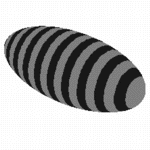
Local entropic effects of polymers grafted to soft interfaces.
Bickel, T.; Jeppesen, C. ; Marques, C.M.

EPJ E, 2001, 4, 33.

Publication 59

The structure of guar in solutions of H2O and D2O: An ultra-small-angle light scattering study.

Gittings, M.R.; Cipelletti, L.; Trappe, V.; Weitz, D.A.; In, M.; Marques, C. M.

J. Phys. Chem. B, 2000, 11, 4381.
Publication 58

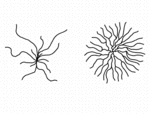
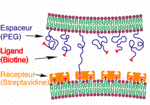
Grafted polymers are microscopic pressure tools.

Bickel, T.; Marques, C.M.; Jeppesen, C.

C.R.A.S. IV, 2000, 1, 661.

Publication 57

Pressure patches for membranes: the induced pinch of a grafted polymer.

Bickel, T.; Marques, C.M.; Jeppesen, C.

P.R.E., 2000, 62, 1124.

Publication 56

Confinement of polysoaps in nonionic surfactant lyotropic bilayers in Supramolecular Structure in Confined Geometries 215th ACS National Meeting (1998)

Yang, Y.; Prudhomme, R.; Richetti, P.; Marques, C.M.

Supramolecular Structure in Confined Geometries 20, 1999, 169-179

Publication 55

Small-angle neutron scattering on neutral and cationic guar galactomannan in Polysaccharide Applications: Cosmetics and Pharmaceuticals Ed, M.A. El-Nokaly and H. A. Soini ACS Symposium Series 737, Oxford University Press (1999).

Gittings, M.R.; Lal, J.; Dérian, P.-J.; Marques, C.M.

Polysaccharide Applications. August 20, 1999, 287

Publication 54

Bulk and surface behavior of cationic guars in solutions of oppositely charged surfactants.

Anthony, O; Marques, CM; Richetti, P.

Langmuir, 1998, 14, 6086.

Publication 53

Confinement of polysoaps in membrane lyotropic phases.

Yang, Y.; Prudhomme, R.; McGrath, K.M.; Richetti, P.; Marques, C.M.

P.R.L., 1998, 80, 2729.

Publication 52

Depletion forces between two spheres in a rod solution.

Yaman, K.; Jeppesen, C.; Marques, C.M.

Europhys. Let. 1998, 42, 221.

Publication 51

Electrostatics in the self-assembly of macromolecular surfactants.

Mendes, E.; Schädler, V.; Marques, C.M.; Lindner, P.; Wiesner, U.

Europhys. Let. 1997, 40, 521.

Publication 50

Rods near curved surfaces and in curved boxes.

Yaman, K.; Jeng, M.; Pincus, P.; Jeppesen, C.; Marques, C.M.

Physica A, 1998, 247, 159.

Publication 49

Scattering from solutions of star polymers.

Marques, C.M.; Charitat, T.; Izzo, D; Mendes, E.

EPJ B, 1998, 3, 353.

Publication 48

Selectively swollen phases of diblock copolymers.

Izzo, D; Marques, C. M.

Macromolecules, 1997, 21, 6544.

Publication 47

Membranes in Rod Solutions: a System with Spontaneously Broken Symmetry.

Yaman, K.; Pincus, P.; Marques, C. M.

P.R.L., 1997, 78, 4514.

Publication 46

How do Surface Fields Couple to Bulk Ordering ?

Turner, M. S.; Marques, C. M.; Rubinstein, M.

in Short and Long Chains at Interfaces Ed. Daillant, J.; Guenoun, P.; Marques, C.,Muller P., Tran Thanh Van Editions Frontières 1995 (Paris) M85.

Publication 45

BOOK: Short and Long Chains at Interfaces.

Daillant, J.; Guenoun, P.; Marques, C., Muller, P.

Editions Frontières 1995 (Paris) M85.

Publication 44

Rigid Gaussian Chains: the Scattering Function.

Marques, C. M.; Fredrickson, G.H.

J. Phys II 1997, 7, 1805.

Publication 43

Flow Effects in the Polymer Cyclization Reaction.

Kolb, A.; Marques, C. M.; Fredrickson, G. H.

Macromol. Th. Simul. 1997, 6, 169.

Publication 42

Deviatoric Spontaneous Curvature of Lipid Membranes Induced by Siamese Macromolecular Surfactants.

Marques, C. M., Fournier, J. B.

Europhys. Let. 1996, 35, 361.

Publication 41

Bunchy Micelles.

Marques, C. M.

Langmuir, 1997, 13, 1430.

Publication 40

Mixed Micelles in a Bidisperse Solution of Diblock Copolymers.

Sens, P.; Marques, C. M.; Joanny, J.-F.

Macromolecules, 1996, 29, 4880.

Publication 39

Les Polymères en Solution in Initiation à la Chimie et à la Physico-Chimie Macromoléculaire.

Marques, C. M.; Joanny, J.-F.

Groupe Français des Polymères 1996

Publication 38

Shear-induced Phase Separation of Complex Fluids: the role of flow-concentration coupling.

Schmitt, V., Marques, C. M.; Lequeux F.

P.R.E., 1995, 52, 4009.

Publication 37

Pollutant-Polysoap Interactions.

Rouault, Y.; Marques, C. M.

J. Phys. II, 1997, 7, 903.

Publication 36

Embedding of Colloids in Copolymer Cubic Phases.

Turner, M.S.; Marques, C. M.

Europhys.Let. 1995, 32, 493.

Publication 35

Shear-induced micellization of diblock copolymers.

Jones, J.; Marques, C. M.; Joanny, J.F.

Macromolecules, 1995, 28, 136.

Publication 34

Viscoelasticity of Adsorbed Polymer Layers.

Sens, P.; Marques, C. M.; Joanny, J.F.

Macromolecules, 1994, 27, 3812.

Publication 33

Surface-induced Lamellar Ordering in a Hexagonal Phase of Diblock Copolymers.

Marques, C. M.; Turner,M.S.; Rubinstein, M.

Macromolecules, 1994, 172, 1168.

Publication 32

Critère de Stabilité pour les Fluides à Paramètre d'Ordre Couplé avec l'Ecoulement.

Schmitt, V.; Lequeux, F.; Marques, C. M.

Les Cahiers de Rh�ologie, 1993, 11, 343.

Publication 31

Relaxation Mechanisms in Worm-like Micelles.

Marques, C. M.; Turner,M.S.; Cates, M.E.

J. Non-cryst. Sol. 1994, 172, 1168.

Publication 30

Hydrodynamic Modes of Viscoelastic Soap Films.

Sens, P.; Marques, C. M.; Joanny, J.F.

Langmuir, 1993, 9, 3212.

Publication 29

Grafted Polymer Brushes under External Fields.

Marko J. F., Johner, A.; Marques, C. M.

J.Chem. Phys., 1993, 99, 8142.

Publication 28

Formation of Micelles of Diblock and Triblock Copolymers in a Selective Solvent.

Izzo, D.; Marques, C. M.

Macromolecules, 1993, 26, 7189.

Publication 27

Fluctuation Effects in the Ordering of Thin Diblock Copolymer Films.

Marques, C. M.

Phys. Rev. Lett. 1993, 70, 1351.

Publication 26

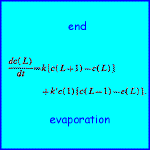
End-evaporation kinetics in living-polymer systems.

Marques, C. M.; Turner, M.S.; Cates, M.E.

J.Chem. Phys. 1993, 99, 7260.

Publication 25

Con finement of living polymers.

Schmitt, V.; Lequeux, F.; Marques, C.M.

J. Phys. II (Paris), 1993, 3, 891.

Publication 24

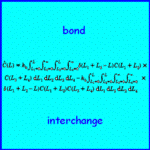
Dynamics of worm-like micelles: the bond-interchange reaction scheme.

Turner, M.S.; Marques, C.M.; Cates, M.E.

Langmuir, 1993, 9, 695.

Publication 23

Can a Polymer Brush Trap a Wetting Layer ?

Johner, A.; Marques, C.M.

Phys. Rev. Let., 1992, 69, 1827.

Publication 22

Characterization of Interfacial Index Gradients by Spectroscopic Ellipsometry at Variable Angle of Incidence.

Rivory, J; Frigerio, J-M; Marques, C.M.

Opt Comm., 1992, 89, 482.

Publication 21

Membrane Curvature Elasticity in Weakly Charged Lamellar Phases.

Harden, J.L; Marques,C.M.; Joanny, J., Andelman, D.

Langmuir, 1992, 8, 1170.

Publication 20

The Eff ect of the Adsorbed Polymer on the Elastic Moduli of Surfactant Bilayers.

Brooks, J.T., Marques, C.M; Cates, M.E.

J Phys II (Paris) 1991, 1, 673.

Publication 19

Nonlinear Thermodynamic Relaxation in Living Polymer Systems.

Marques, C.M., Cates, M.E.

J.Phys II (Paris) 1991, 1, 489.

Publication 18

Diblock Copolymers: Comicellization and Coadsorption.

Shim, D.F.K.; Marques, C.M.; Cates, M.E.

Macromolecules 1991, 24, 5309.

Publication 17

Dynamic Relaxation of Rod-Like Micelles.

Cates, M.E.; Marques, C.M.; Bouchaud, J.P.

J. Chem. Phys. 1991, 94, 8529.

Publication 16

Diblock Copolymers in a Selective Solvent.

Johner, A; Joanny, J.F.; Marques, C.M.

Physica A, 1991, 192, 285.

Publication 15

E ffective Ellipsometric Thickness of an Interfacial Layer.

Marques, C.M.; Frigerio, J-M.; Rivory, J.

J. Opt. Soc. Am., 1991, 12, 2523.

Publication 14

Role of Adsorbed Polymer in Bilayer Elasticity.

Brooks, J.T.; Marques, C.M.; Cates, M.E.

Europhys. Let., 1991, 14, 713.

Publication 13

Harmonic Corrections near the Ordering Transition.

Marques, C.M.; Cates, M.E.

Europhys. Let., 1990, 13, 267.

Publication 12

Shear Induced Order in Dilute Lamellar Systems in Proceedings of the 10th General Conference of the EPS Condensed Matter Division Lisbon (1990).

Marques, C.M.; Cates, M.E.

Physica Scripta 1991, T35, 75.

Publication 11

Hexagonal and Lamellar Mesophases Induced by Shear.

Marques, C.M.; Cates, M.E.

Journal de Physique 1990, 51, 1733.

Publication 10

Rigid Polymer Network Models.

Jones, J.L.; Marques, C.M.

Journal de Physique 1990, 51, 1113.

Publication 9

Adsorption of Random Copolymers.

Marques, C.M.; Joanny, J.F.

Macromolecules 1990, 23, 268.

Publication 8

Les Polymères aux Interfaces.

Marques, C.M.

PhD Thesis Université Claude Bernard, Lyon I (1989).

Publication 7

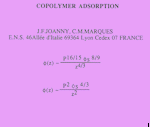
Copolymer Adsorption in Proceedings of Space-Time Organization in Macromolecular Fluids.

Joanny, J.F.; Marques, C.M.

Editors: F. Tanaka, M. Doi, T Ohta. Springer Series in Chemical Physics, 1989, 51, 152.

Publication 6

Adsorption of Random Copolymers in Proceedings of Phase Transitions in Soft Condensed Matter.

Marques, C.M.

Editors: T. Riste, D. Sherrington. NATO ASI Series, Plenum Press, New York 1989.

Publication 5

Simple Cubic Structure in Micellar Copolymer Mesophases.

Marques, C.M.; Witten, T.A.

Journal de Physique 1989, 50, 1267.

Publication 4

Block Copolymer Adsorption in a Nonselective Solvent.

Marques, C.M.; Joanny, J.F.

Macromolecules 1989, 22, 1454.

Publication 3

Adsorption of Semi-dilute Polymer Solutions on Fractal Colloidal Grains.

Marques, C.M.; Joanny, J.F.

Journal de Physique 1988, 49, 1103.

Publication 2

Adsorption of Block Copolymers in Selective Solvents.

Marques, C.M.; Joanny, J.F., Leibler, L.

Macromolecules 1988, 21, 1051.